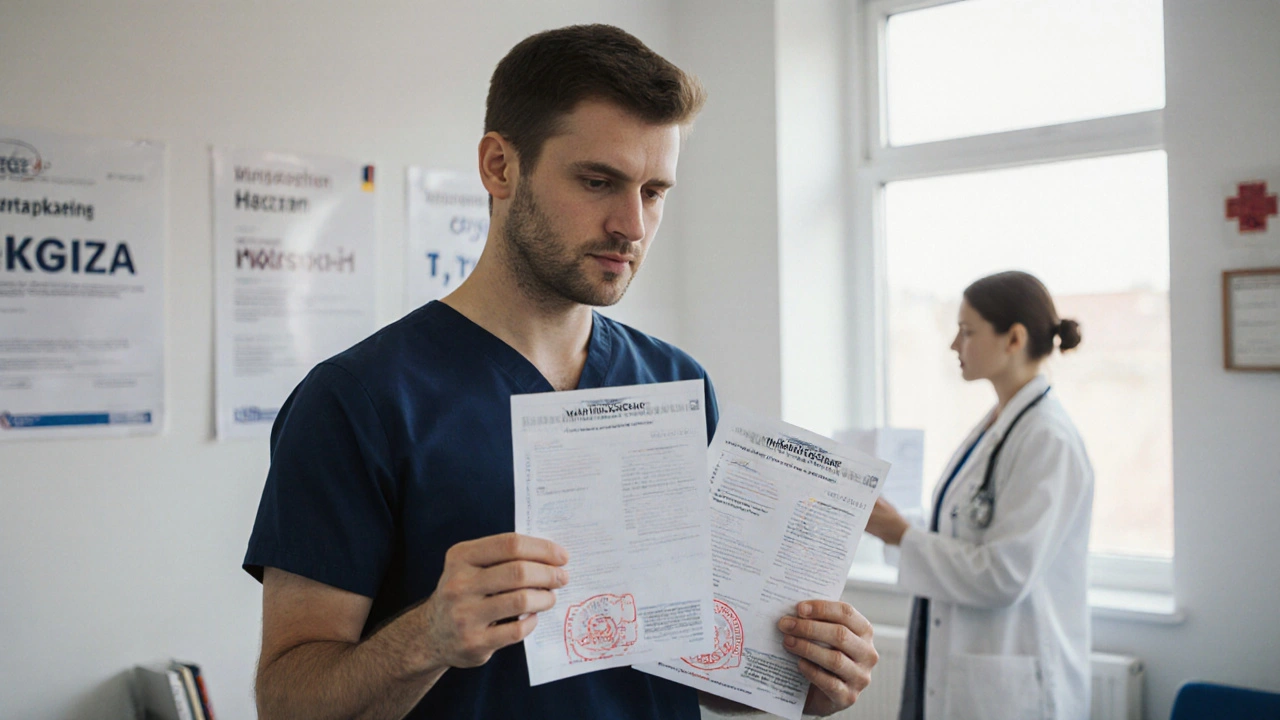
Zwolnienie lekarskie za granicą: co musisz wiedzieć przed powrotem do Polski
When you get sick abroad and need a zwolnienie lekarskie za granicą, dokument potwierdzający brak zdolności do pracy wydany przez zagranicznego lekarza. Also known as nieprzydatność do pracy za granicą, it is not automatically valid in Poland — even if you’re covered by the European Health Insurance Card. Many people assume that if they get sick in Germany, Spain, or Italy, their doctor’s note will work back home. It doesn’t. The Polish NFZ has strict rules about what counts as proof of illness, and a simple note from a foreign clinic often gets rejected.
That’s where zwolnienie lekarskie w UE, specjalny formularz wydawany przez lekarza w kraju UE zgodny z przepisami Unii Europejskiej comes in. If your doctor gives you a form with the official EU stamp — usually labeled "Sickness Certificate" or "Certificat de maladie" — it has a much better chance of being accepted. But even then, you need to check the details: the document must include your Polish PESEL number, the exact dates of incapacity, and the doctor’s official stamp with contact information. Without these, you’re on your own.
What if you got sick in a country outside the EU? Then it gets harder. Poland only recognizes foreign sick leaves from countries with bilateral agreements — like Norway, Switzerland, or Iceland. For others, you’ll need to get a potwierdzenie zwolnienia, dokument potwierdzający chorobę wydany przez lekarza w Polsce po powrocie within 7 days of returning. That means visiting your family doctor, showing them your medical records from abroad, and asking them to issue a new sick note based on your diagnosis. No records? No proof? You might have to take unpaid leave.
And don’t forget: NFZ za granicą, system opieki zdrowotnej w Polsce, który pokrywa koszty leczenia w UE, ale nie automatycznie potwierdza zwolnienia doesn’t pay for sick leave issued abroad. Your employer is the one who decides whether to accept the foreign document — and many HR departments refuse it outright unless it’s properly translated and stamped. If you’re planning to use it for pay, you need to act fast.
There’s also a hidden trap: if you’re on a business trip and get sick, your employer might expect you to return to work immediately after you land — even if you’re still unwell. Polish labor law protects you, but only if you have the right paperwork. Without a valid zwolnienie lekarskie za granicą, your absence could be counted as unexcused. And that means lost pay, or worse — disciplinary action.
So what should you do? First, ask the foreign doctor for the EU standard form. If they don’t have it, get a detailed medical report with diagnosis, dates, and signature. Second, translate it into Polish using a certified translator — not Google Translate. Third, bring all your receipts, prescriptions, and test results. Fourth, visit your Polish doctor within a week. Don’t wait. The clock starts ticking the moment you land.
Below you’ll find real-life guides on how to handle medical situations at home — from getting a doctor to visit you in Warsaw to understanding what your employer can and can’t see on your sick leave. These aren’t just tips. They’re the kind of practical advice that saves you from losing pay, getting in trouble at work, or being stuck without care when you need it most.
Jak wystawić zwolnienie lekarskie za granicą, by je przyjęto w Polsce? Wszystko o wymaganiach, tłumaczeniach, apostylu i procedurach dla pracowników za granicą. ZUS, pracodawca i prawa ubezpieczeniowe.